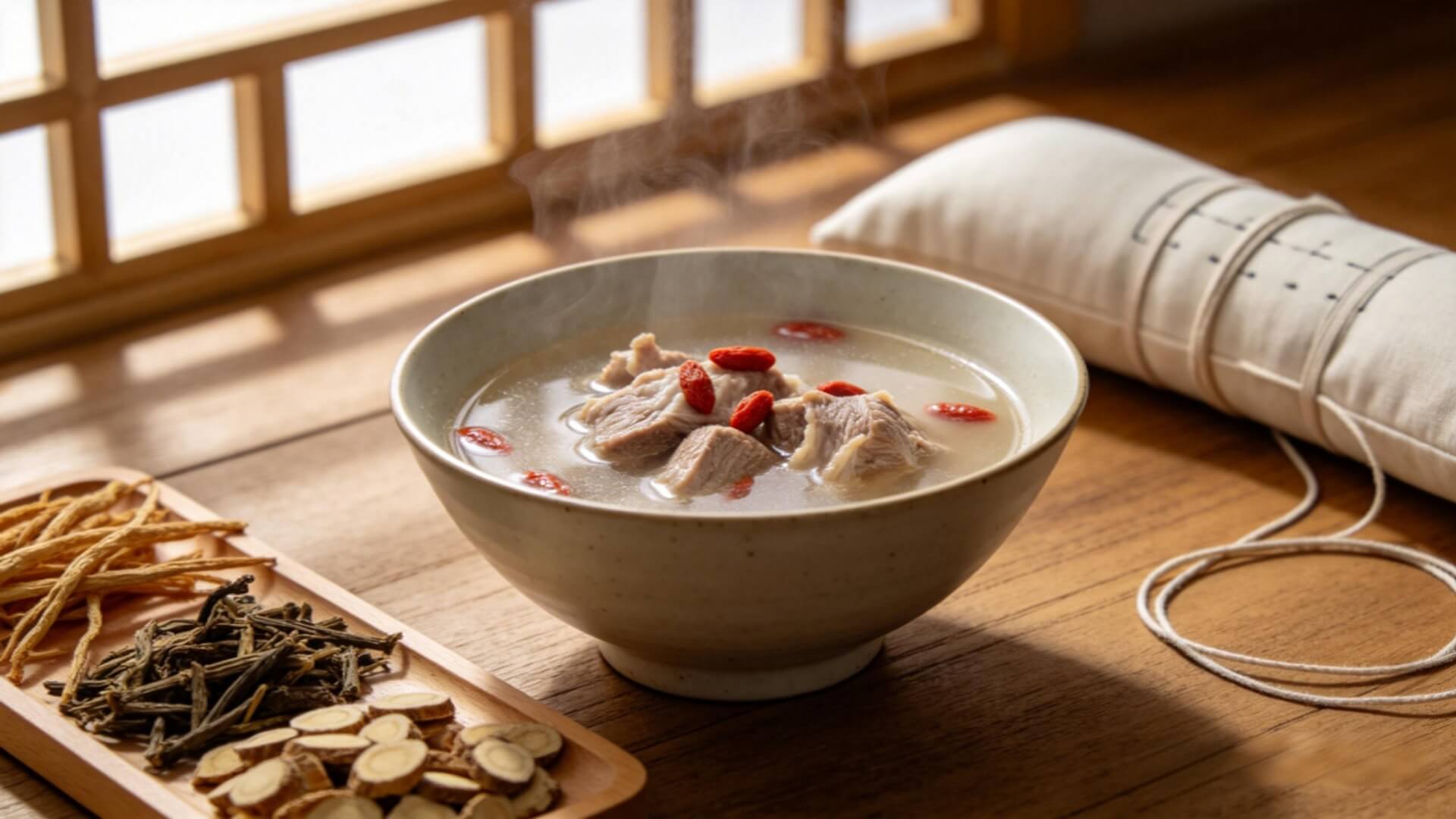
A real-life look inside the Four Examinations of Chinese Medicine, and why lamb hotpot is the ultimate winter survival tool.
Note: This post contains Amazon affiliate links. See full disclosure at the end.
Hey friends, it’s Mike Liang.
Last week, I learned a painful lesson: Spicy hotpot + three nights of bad sleep = Disaster.
The Tuesday My Face Exploded
I woke up on a Tuesday looking like a hamster storing food for winter. One side of my face was swollen, my gum was throbbing, and it felt like someone had lit a tiny campfire inside my cheek. I stumbled into the local pharmacy, expecting some heavy-duty antibiotics.
The pharmacist, an older auntie with sharp eyes, took one look at my red, puffy face and didn’t even ask for my symptoms.
“Yánzhòng shànghuǒ,” she declared. “Serious Internal Heat.”
She slapped a box of Niuhuang Jieyu Pian (herbal heat-clearing pills) on the counter. “Take these. No spicy food. Sleep before 11 PM.” Her tone wasn’t a suggestion; it was a command.
I obeyed. By the next afternoon, the swelling and pain were gone. I was amazed.
Cured, But Drained
My toothache was gone, but that night, I looked in the mirror and realized something:
I’d been running on fumes for weeks.
It wasn’t just the spicy hotpot. It was the three nights of bad sleep before that.
When I told my Chinese friend Ling about my toothache cure, she nodded.
“Sure, you cleared the heat,” she said. “But look at your eyes. You’re running on empty.
In TCM, we call it ‘Xu’ — deficient.
She pointed out how many of my female friends are always tired, especially after their periods or after having kids.
“They feel ‘Xu’ (Deficient),” Ling said. “In TCM theory, menstruation and childbirth consume a lot of Blood and Qi. If you don’t replenish it, you’re like a phone battery stuck at 10%. No matter how much you sleep, you can’t charge up.”
From Espresso to Herbal Tonics
Instead of reaching for a fifth espresso, I started noticing them drinking these tiny brown bottles of Qi-tonifying herbal liquid (like Honghua Siwu). They told me it’s a traditional tonic often used in Chinese culture to support vitality and nourish the body after their cycle. It’s their way of gently replenishing energy naturally. It’s fascinating to see them switch from coffee to these herbal extracts to truly recharge.
The Mystery of the “Kidneys” (And Why Guys Burn Out)
Then there’s the confusing part for my Western friends: The Kidneys.
To people in the West, kidneys filter urine. But in TCM? They’re considered the “Root of Life.” They are believed to store your essential energy (Jing).
I learned this the hard way after complaining about lower back pain, weak knees, and feeling cold all the time. I went to see a TCM doctor, and this is where the magic happened.
He didn’t ask for blood tests. He didn’t scan me.
He simply asked me to stick out my tongue (Wang – Looking), listened to my breathing (Wen – Smelling/Hearing), asked about my habits (Wen – Asking), and then… he touched my wrist.
The Pulse Diagnosis (Qie)
He placed three fingers on my radial artery. He sat there silently for a full minute, feeling the rhythm, the strength, the depth of my pulse.
Then he looked up and said: “You stay up too late. And you’ve been overindulging in your personal life, haven’t you? Your pattern suggests ‘Kidney Yang Deficiency’.”

I was stunned. How did he know?
He explained that in TCM theory, chronic staying up late is believed to drain your Yin, while excessive lifestyle habits (you know what I mean…) are thought to drain your Kidney Essence. This can lead to two main patterns of imbalance:
- Yang Deficiency (Cold Type): Like me. Cold hands, pale face, low energy, needing warmth. Often associated with burning the candle at both ends.
- Yin Deficiency (Hot Type): Night sweats, dry mouth, restless sleep. Often associated with running on empty for too long.
Based on his assessment, he suggested I try warming herbs traditionally used for ‘Kidney Yang’ support. It wasn’t a generic fix; it was a personalized recommendation based on the subtle signals his fingers detected in my pulse. That blew my mind. This is a medical system that has been assessing internal balance without machines for thousands of years. Isn’t that incredible?
The Cantonese Soup Culture (And Why You Should Too)
This brings me to food. If you walk into a Chinese restaurant in January, everyone is eating Lamb Hotpot.
I know, many foreigners aren’t used to the smell or taste of lamb. But there’s a brilliant reason behind this.
In TCM theory, winter is the season of Yin (Cold). The environment is believed to drain your body’s heat. To maintain balance, traditional wisdom suggests eating Yang (Warm) foods.
Lamb is considered deeply “warm” in nature. Eating lamb in winter is like putting a fresh log on the fireplace inside your stomach. It’s traditionally believed to boost Qi, warm the blood, and shield the body from the cold wind.
Now, whenever I feel freezing in January, I don’t just crank up the heater. I make a pot of lamb soup with ginger and goji berries. The difference is real. You feel the warmth spreading from your belly to your fingertips.

The Greatness of TCM: Listening to Your Body
Whether it’s cooling down a toothache, supporting a woman’s vitality after her period, or helping a man maintain warmth and energy, TCM is all about listening.
It uses the Four Examinations (Looking, Listening, Asking, Touching) to see the whole picture. It doesn’t just treat a symptom; it looks at the person. It understands that your sleep, your diet, your stress, and even your private life are all connected to your physical well-being.
For my friends overseas who are new to this: This is the wisdom we’ve grown up with in China. It’s not magic; it’s a sophisticated system of observing nature and the human body that has helped generations maintain their health.
My Simple “Balance” Toolkit
You don’t need to become an expert overnight. But you can start respecting your body’s signals.
I’ve started keeping a few simple things at home to help maintain this balance as part of my daily wellness routine:
- For the “Heat” Days: After a spicy meal or a late night, I brew Chrysanthemum Tea. In traditional Chinese wellness, this flower is cherished for its cooling properties and ability to soothe discomfort. It’s my go-to for finding balance. 👉 [*Link to Chrysanthemum Tea*]
- For the “Cold” Days: When I feel sluggish, chilly, or just “empty,” I sip on Ginger Tea.Ginger is a classic ingredient known to help warm you from the inside out and boost your natural energy.It’s my cozy little ritual for cold winter days. 👉 [*Link to Ginger Tea*]
The Tongue Tells the Truth
I’ve also put together a simple guide to tongue diagnosis so you can start learning how to “look” at your own health, just like a TCM doctor does. It’s a fun way to connect with your body. 👉 [Link to Guide/Kit]
Don’t wait until your battery hits 0%. Start listening to your body today. Respect the rhythm of nature, rest when you need to, and maybe… lay off the spicy hotpot when you’re tired.
Stay balanced, stay curious,
Mike 💛
Disclosure: As an Amazon Associate I earn from qualifying purchases. This post contains affiliate links (marked with *). I may earn a commission if you purchase through these links at no extra cost to you.
(Disclaimer: These statements have not been evaluated by the Food and Drug Administration. These products are not intended to diagnose, treat, cure, or prevent any disease. The information shared in this article is based on traditional Chinese wellness practices and my personal experience. It is for educational purposes only. Always consult with a qualified healthcare professional before starting any new herbal regimen, especially if you have underlying health conditions, are pregnant, or are taking medication.)
Want my free Guangxi Longevity Shopping List?
Get the 5 wellness products I use (with direct Amazon links) delivered to your inbox. No spam, just the good stuff.
Leave a Reply