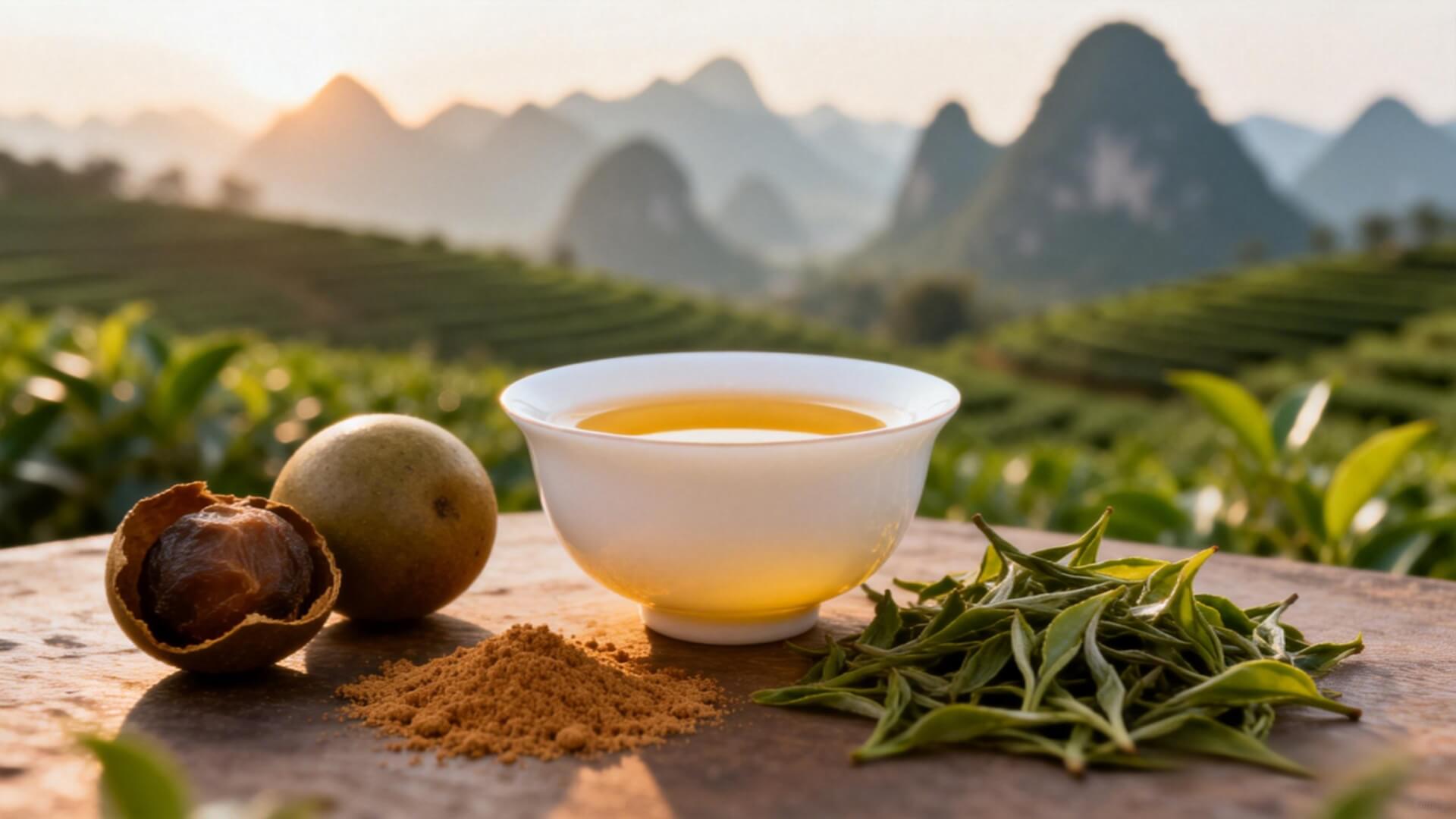
Plus, discover the selenium-rich white tea that pairs perfectly with a healthy, balanced lifestyle.
Note: This post contains Amazon affiliate links. See full disclosure at the end.
Hey friends, it’s Mike Liang.
Let’s be honest: who doesn’t love something sweet? But for many of us (myself included!), that sugar rush often comes with a side of guilt—worries about calories, blood sugar spikes, or just feeling sluggish afterwards.
I used to think I had to choose between enjoying sweetness and staying healthy. That was until I discovered a little-known secret from Yongfu County in Guangxi, China.
You might have heard of Bama for longevity, but Yongfu is officially recognized as a “World Longevity City” too. While reading the book “Brand Guangxi”, I learned that the locals there have been enjoying a unique kind of sweetness for centuries—one that comes straight from nature, with zero calories.
It’s called Luo Han Guo (Monk Fruit).
The “Miracle Fruit” That Tastes Like Sugar (But Isn’t)
In the West, if you want a low-calorie sweetener, you often reach for artificial packets. But in Yongfu, they’ve been growing this small, round green fruit for generations.
Here’s the amazing part: Monk Fruit is naturally sweet.
It contains natural compounds called mogrosides, which are about 300 times sweeter than sugar, yet they contain virtually no calories and do not raise blood sugar levels.
When I first tried it, I was shocked. How can something so sweet be… healthy?
For anyone watching their sugar intake, managing a keto lifestyle, or simply trying to cut down on refined carbs, Monk Fruit sweetener is a game-changer. It tastes clean, without that weird chemical aftertaste you get from some artificial sweeteners.
Plus, in Traditional Chinese Medicine (TCM), Monk Fruit has long been cherished for its soothing properties. If you’ve been talking a lot, singing, or just feel a bit of dryness in your throat, a warm cup of Monk Fruit tea feels incredibly comforting. It’s like a gentle hug for your throat.
My New Morning Ritual: Coffee + Monk Fruit
I’ll admit, I was skeptical about using it in my daily coffee. Would it taste strange? Would it be too sweet?
I tried this Pure Monk Fruit Sweetener extracted from Yongfu fruits, and it completely changed my morning routine.
- In Coffee: Just a tiny pinch turns my bitter black coffee into a smooth, café-style latte. No calories added, no spike in energy followed by a crash.
- In Baking: I recently tried using it to make some weekend cookies for my friends. It baked just like sugar, giving a lovely golden color and sweetness, but without the guilt.
It’s not just a “diet” product; it’s a way to enjoy life’s little treats without compromising your wellness goals.

Don’t Forget the Tea: Yongfu Baihao (White Hair Tea)
While we’re talking about Yongfu, I have to mention another local treasure: Yongfu Baihao Tea.
This tea grows in the region’s unique karst landscape, in soil rich in Selenium—a powerful antioxidant mineral that supports overall well-being.
The leaves are covered in fine, silvery hairs (hence the name “White Hair”), and the brew is incredibly fresh and smooth. It’s not bitter at all.
After a heavy meal, or when I’m just feeling a bit sluggish, brewing a cup of this selenium-rich tea makes me feel refreshed and light. It’s a simple, natural way to reset your palate and hydrate with benefits.

Bringing Yongfu’s Wisdom to Your Kitchen
You don’t need to travel to China to experience this. The wisdom of Yongfu’s longevity habits is now accessible right in your pantry.
Whether you’re looking to reduce your sugar intake, find a better coffee companion, or just try something new and natural, these products from Yongfu are fantastic options.
My Recommendations:
- 👉 [*Pure Monk Fruit Sweetener*]: Perfect for coffee, tea, and baking. Zero calories, 100% natural. No erythritol, no fillers — just the natural sweetness of Luo Han Guo in a bottle. One drop equals a teaspoon of sugar… minus the calories and blood sugar spike.
- 👉 [*Authentic Guangxi Monk Fruit*]: Hand-picked whole fruits from Guangxi’s famous longevity county. Steep one in hot water for a naturally sweet, cooling and soothing tea — a beloved health treasure in Chinese households for centuries.
- 👉 [*Spring Dragon Longevity Tea*]: This is my go-to daily herbal pick when I can’t get my hands on Yongfu selenium-rich white tea. It’s naturally caffeine-free, packed with adaptogens like gynostemma, schisandra, and goji berry, and designed to support calm, steady energy, and gentle digestion—all without any jitters or crash. Perfect for sipping morning, afternoon, or evening.
It’s not about strict diets or depriving yourself. It’s about making smarter, natural choices that let you enjoy sweetness and wellness together.
Give it a try. Your taste buds (and your body) will thank you!
Stay sweet and healthy,
Mike 💛
Disclosure: As an Amazon Associate I earn from qualifying purchases. This post contains affiliate links (marked with *). I may earn a commission if you purchase through these links at no extra cost to you.
(Disclaimer: These statements have not been evaluated by the Food and Drug Administration. These products are not intended to diagnose, treat, cure, or prevent any disease. The information shared here is based on traditional cultural practices and personal experience. Monk fruit sweetener is a food ingredient and should be consumed as part of a balanced diet. Always consult with a healthcare professional regarding any specific health concerns, especially related to blood sugar or diet.)
Want my free Guangxi Longevity Shopping List?
Get the 5 wellness products I use (with direct Amazon links) delivered to your inbox. No spam, just the good stuff.
Leave a Reply